Tony Henderson challenged the limits of witness recollections, forensic evidence and Boone's police interview while presenting testimony about earlier domestic incidents for her defense. He also requested a culpable-negligence instruction, which the court included among the lesser-offense options.
DefenseHenderson and Raybon, PLLC
Tony Henderson
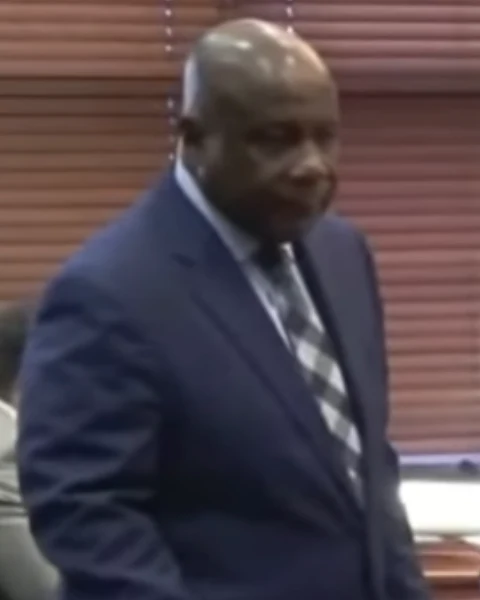
Tony Henderson is a defense attorney with Henderson and Raybon, PLLC, representing Sarah Boone.
Appeared2024 Criminal Trial
1,430 lines·88 proceedings·1 mention
About
Tony Henderson emphasized the presumption of innocence during jury selection for Sarah Boone's defense and explored prospective jurors' attitudes toward self-defense, abusive relationships and alcohol. The court limited three self-defense hypotheticals but allowed questioning about alcohol's effects. Henderson also asked jurors to consider how alcohol-related attitudes might affect their evaluation of evidence.
On Day 3, Henderson argued that Boone needed to present evidence supporting self-defense before Dr. Julie Harper's testimony could become relevant. The court required a foundation for battered spouse expert testimony. In a separate digital-exhibit dispute, he questioned how the State would establish the necessary foundation; the court overruled broad objections while preserving objections at trial.
His cross-examinations tested what witnesses had observed and how accurately they recalled earlier statements. Juan Torres confirmed hearing Boone yell about choking but had not asked Jorge Torres what she meant. Brandon Moats clarified his patio observation and limited recollections, placing arguing around 7:00 to 8:00. Henderson questioned Abraham Moreno about whether he had previously reported Boone's statement about teaching Torres a lesson. Moreno qualified that recollection and said Boone had not explained how things got out of hand.
Henderson also examined the limits of forensic and investigative evidence. Meredith McCaskill explained that DNA testing could not determine transfer or timing, while Junella Uadan explained that account names and originating numbers did not establish who physically typed a message. With Chelsey Koepsell, Henderson questioned collection decisions and the circumstances of Boone's February 25 interview. Koepsell said she had planned to arrest Boone beforehand but disclosed the arrest only afterward. The court allowed arrest-notice questions but barred inquiry into whether withholding notice was a strategic decision, explaining that voluntariness concerned Boone's perspective rather than the detective's subjective analysis. It also sustained two objections to refreshing Koepsell's recollection because a memory gap had not been established.
During the defense case, Henderson elicited deputies' accounts of earlier domestic incidents. Jessica Ramirez Delgado described injuries on Boone and Torres during a 2018 call and recalled Boone's statement about fighting back. John Alden described injuries during a 2019 battery call and confirmed Torres's arrest. Henderson returned to Moreno's prior account through Koepsell, who distinguished the recorded wording about passing out from counsel's proposed wording. The court barred reading the transcription aloud.
At the Day 10 charge conference, Henderson requested a culpable-negligence instruction, pointing to Boone going upstairs while Torres remained in the suitcase. The court included that lesser offense. During the self-defense instruction debate, Henderson argued that the initial zipping of the suitcase had been consensual rather than forceful. The court settled contested self-defense instructions and agreed on battered spouse syndrome language.
Trial Record (88)
No proceedings match this filter.