James Sylivan Owens defended Sarah Boone by linking her claimed fear and alleged prior abuse to a justified-force theory of the suitcase incident. He developed that account through Boone's testimony and trauma evidence, challenged forensic and expert-opinion limits, and obtained a ruling conditionally allowing prior-violence and battered spouse evidence.
Defense
James Sylivan Owens
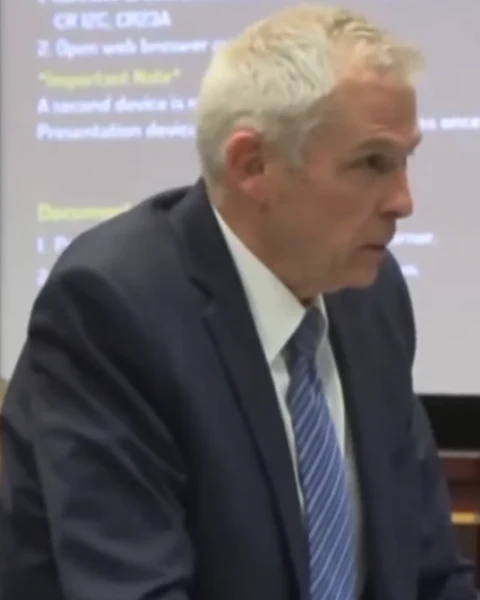
James Sylivan Owens is a defense attorney representing Sarah Boone.
Appeared2024 Criminal Trial
2,679 lines·150 proceedings·6 mentions
About
James Sylivan Owens presented Sarah Boone's defense as a claim of justified force, arguing that alleged repeated abuse explained her fear and her use of the suitcase as a restraint. In his Day 5 opening, he emphasized the approximately 11-minute interval between the suitcase videos and promised Boone's testimony while acknowledging alleged interrogation lies. He also challenged investigators' statements as prejudicial opinions invading the jury's role. The court ordered interview redactions on Day 3; when the interrogation recording was offered on Day 6, Owens renewed his objection, and the court admitted it over objection.
Owens tested the observation and forensic limits of the State's evidence. His cross-examination of neighbor Vincent Battaglia explored what Battaglia could hear and when; Battaglia rejected a suggested earlier arrival time and placed audible arguing around 10 or 10:30 that night. Owens questioned medical examiner Sara Zydowicz about death timing, inferred positioning, suitcase testing, alcohol, coronary disease, and injury mechanisms. She acknowledged limits but maintained her combined asphyxia diagnosis. The court sustained a relevance objection to questions about prior positional-asphyxia cases and admitted five defense autopsy photographs, which Owens received permission to publish.
On Day 7, Owens elicited Boone's account of zipping Torres inside the suitcase, using a bat, and acting from claimed fear. He argued that threats and a hand emerging from the suitcase established the overt act needed to introduce prior-violence evidence. The court subsequently found an overt act established and conditionally allowed prior-violence and battered spouse evidence. Owens then developed Boone's allegations through injury photographs and questions linking prior violence to her explanation of the incident. Her testimony included admissions of false accounts and lies to police. On redirect, she clarified that the bat struck Torres' exposed hand outside the suitcase and acknowledged forceful poking that bruised her own hand.
Owens used digital and expert testimony to develop the defense's relationship and trauma evidence. His examination of Junella Uadan established that two videos came from Boone's phone; both were admitted and played. Through Julie Harper, he elicited her PTSD diagnosis and opinion that Boone had battered spouse syndrome at the event, subject to court limits on relaying supporting hearsay. His redirect addressed power and control, with Harper qualifying her answers about car keys and financial support.
During the State's rebuttal, Owens challenged Tonia Werner's opinion disclosures and evaluation bases. The court found an inadvertent but substantial discovery violation, and Owens chose cross-examination rather than striking her already-heard PTSD opinion. The court permitted an immediate supervised deposition to address discovery prejudice and declined to strike Werner. Owens pursued the disclosure dispute during that questioning and obtained broader cross-examination. Werner agreed that Boone had battered spouse syndrome but said she lacked enough information for a PTSD opinion.
Owens sought a special battered spouse instruction; the court later settled contested self-defense instructions and agreed battered spouse language. In closing, he connected alleged coercive control, trauma, and perceived danger to justification, arguing that either deadly or non-deadly force justification supported acquittal. He challenged the neighbors' timing, explained Boone's lies, and urged reasonable doubt. These were defense arguments, not findings. The court sustained several objections, struck two statements, and sustained an objection to his personal-familiarity remark about Boone.
Trial Record (150)
No proceedings match this filter.